Tokenomics Overview
SSV token’s main use cases are governance and staking.
- Governance - Participate in SSV Network decision-making and treasury allocation
- Staking - Stake SSV tokens to support oracle infrastructure
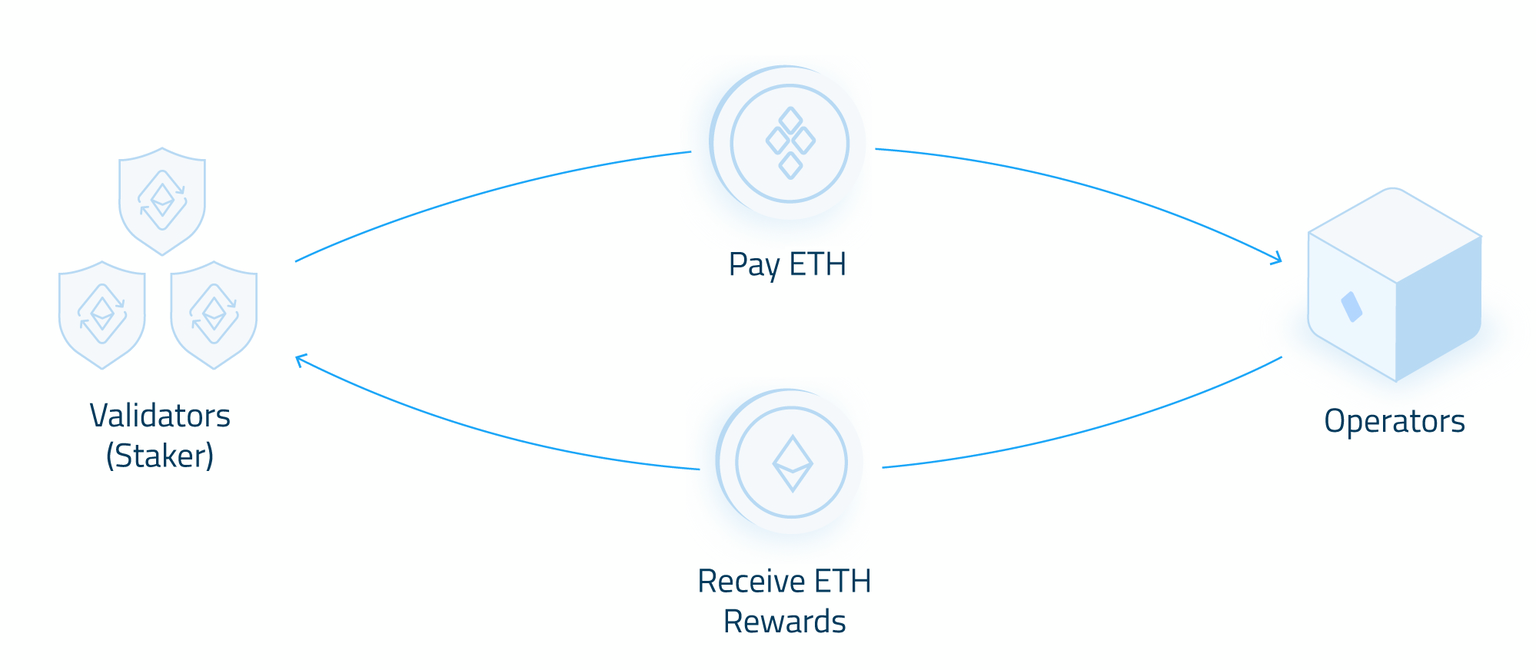
ETH is used for payments between stakers and SSV Node operators to maintain validators. Operators work with the rest of the cluster to perform validator duties on the Beacon Chain, helping validators earn Ethereum staking rewards.
Network Payments
The network uses ETH-based payments for clusters and operators:
- Clusters - Deposit ETH to cover operator and network fees
- Operators - Receive ETH payments for managing validators
- Network fees - A portion of ETH fees flows to SSV staking rewards
SSV token utility
Staked SSV supports the network’s oracle infrastructure by providing voting weight for effective balance reporting.
When clusters pay fees in ETH, a portion flows into the SSV Staking contract and is distributed proportionally to token holders. Learn more in the SSV Staking Guide.
Dual Utility Model
SSV token serves multiple purposes in the ecosystem:
| Utility | Description | Benefit |
|---|---|---|
| Governance | Vote on protocol decisions and treasury allocation | Decentralized control |
| Oracle Support | Staked SSV supports oracle consensus | Network security and accuracy |
| Legacy Payments | SSV tokens are still used in legacy clusters | Backward compatibility |
| Staking | Stake SSV to support the network's oracle infrastructure | Provides voting weight for effective balance reporting |
Economic Sustainability
The new economic model creates sustainable, circular value flow:
- More ETH staked → More validators using SSV
- More validators → More ETH fees collected
- More fees → Higher rewards for SSV stakers
- Higher rewards → Increased usability for SSV token
- More SSV staked → Stronger oracle infrastructure
- Stronger network → Attracts more ETH validators
This positive feedback loop ties SSV directly to real network usage and rewards.